Welcome to Finland. Seriously, welcome.
I know exactly how you’re feeling right now. You’ve just landed in Helsinki, or maybe Tampere or Oulu. You’re looking around at the clean streets, the efficient trams, and the beautiful architecture, and you’re thinking, “This is great!”
But then, you tried to do something simple. You tried to open a bank account in Finland.
And suddenly, that warm, fuzzy feeling turned into a cold knot of panic in your stomach. Maybe you walked into a branch and were told you need an appointment three weeks from now. Maybe they asked you for papers you’ve never heard of. Or maybe you’re just sitting in your temporary Airbnb, staring at a laptop screen, realizing that without Finnish bank codes, you can’t sign a lease, you can’t get internet, and you can’t even log into the tax office.
I get it. I really do. I’ve been living here for over ten years. I’ve gone through the wringer myself, and I’ve held the hands of dozens of friends as they navigated this bureaucracy. I’ve seen grown men cry over “strong electronic identification.”
Here is the hard truth: Opening a bank account in Finland in 2026 is harder than it has ever been. It is a nightmare of regulation, suspicion, and paperwork.
But it is not impossible.
You just need a map. And that’s what this post is. I’m going to walk you through exactly how the system works right now—including the massive changes that hit in January and May of 2026. Grab a coffee (or something stronger), take a deep breath, and let’s get this sorted.
Table of Contents
ToggleWhy Is This So Hard? (The 2026 Reality Check)
First, stop blaming yourself. You didn’t do anything wrong. The system is rigged against you by design, not out of malice, but out of fear.
Finland is a paradox. It’s a cashless society. You can buy a pack of gum with your watch. But getting into that system is like trying to break into Fort Knox. Why?
The "De-Risking" Panic
Finnish banks are terrified of money laundering. The Financial Supervisory Authority (Finanssivalvonta) is incredibly strict. If a bank lets a “risky” person open an account and that person moves €500 of suspicious money, the bank gets fined millions.
So, the banks have adopted a strategy called “de-risking.” Instead of spending time checking if you are a good person, it’s cheaper for them to just say “no” or make the process so hard that you go away. To them, you—a foreigner with no credit history here—are a walking red flag.
The New 2026 Aliens Act
This is the big change that hit us on January 8, 2026. The government amended the Aliens Act to make obtaining Permanent Residence (PR) much harder. It used to be four years. Now, it’s six years.
Why does this matter for your bank account in Finland?
Because banks love stability. Before, after four years, you were “safe.” Now, you are considered “temporary” for six whole years. That means for six years, you are a higher credit risk. It’s harder to get credit cards, harder to get loans, and the banks scrutinize you more because they assume you might leave.
On top of that, the new rules about language proficiency (B1 level) mean banks are judging your integration. If you don’t speak Finnish, you are statistically seen as less likely to stay, which makes you a less profitable customer.
Sounds cynical, right? It is. But understanding this helps you beat them.
The Trap: The "Zombie Account" vs. Real Banking
This is the most important thing I will tell you today. Please read this twice.
A bank account is not enough.
In Finland, your bank login credentials (called Tunnistus or strong electronic identification) are your digital ID card. You use them to log into everything:
Kela (Social security)
Vero (Tax office)
Omakanta (Healthcare records)
Signing your rental contract
Buying things online
Here is the trap: By EU law, banks must give you a “Basic Payment Account” (Perusmaksutili). They can’t refuse you an IBAN to receive your salary.
However, they can—and often do—refuse to give you the online banking codes (the Tunnistus) if they aren’t 100% sure about your identity.
If you get a Basic Account without codes, you have a “Zombie Account.” You can put money in, you can use a debit card at the grocery store, but you cannot log into the digital state. You are a digital ghost. You will have to visit tax offices in person like it’s 1995. You want to avoid this at all costs.
Must Read
The 2026 Lifeline: Hightrust.id
If you do get stuck with a Zombie Account, don’t panic. As of February 2026, there is finally a real alternative.
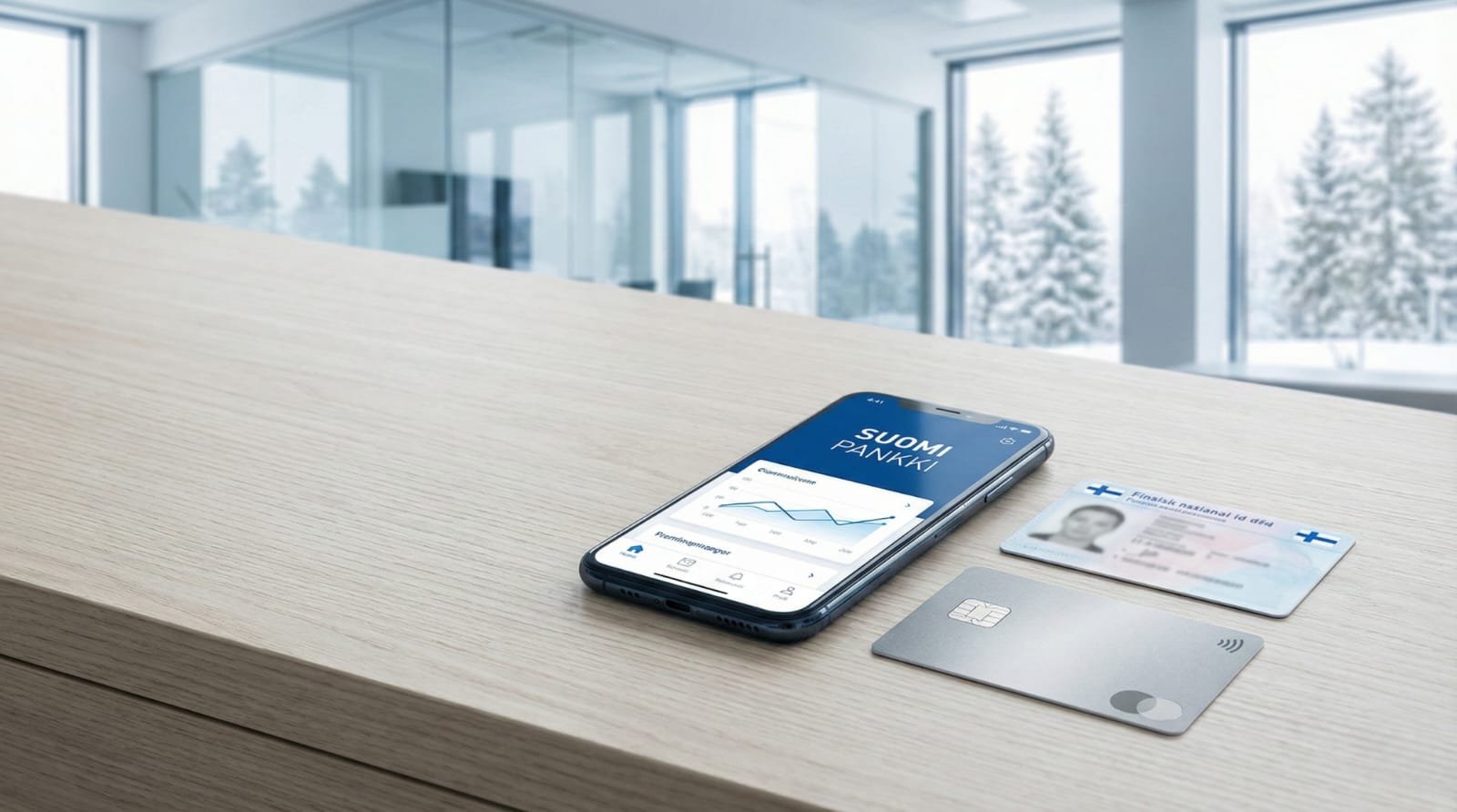
It’s called hightrust.id. This is a new domestic app that uses the NFC chip in your Finnish Police ID card to create a secure digital ID on your phone. It has finally reached “High” Level of Assurance.
If the bank denies you codes, getting a Police ID card and using the hightrust.id app is your escape hatch. It lets you log into government services without the bank’s permission. It’s a game-changer for us expats.
The Battle Plan: Your Step-by-Step Guide
Okay, enough theory. Let’s get to work. Do not walk into a bank yet. If you walk in fresh off the plane with just your passport, they will laugh you out of the building (politely, because they are Finnish, but still).
Follow this order. Do not skip steps.
Step 1: DVV (The Digital and Population Data Services Agency)
As soon as you land, go to the DVV. You need to register your right of residence and get your Personal Identity Code (henkilötunnus).
You cannot open a bank account in Finland without this code. Well, technically you can, but it’s a disaster and you’ll never get online codes. Just get the code. If you are a “Specialist” (high-income earner), use the Fast Track service. It takes about two weeks.
Step 2: The Police ID Card (DO NOT SKIP THIS)
I see so many people skip this to save money. Don’t.
Once you have your Personal ID Code, go to the Police station and apply for a Finnish Identity Card for Foreigners. It costs about €60.
Why?
Foreign passports are often rejected for issuing strong electronic ID tokens. The bank teller doesn’t know how to verify a passport from Brazil or India securely.
The Police ID card is the “root of trust.” If the Police trust you enough to give you this card, the bank feels safe giving you codes.
As mentioned above, you need this card for hightrust.id if the bank rejects you.
This card is your golden ticket. Apply for it immediately. It takes a few weeks to arrive.
Step 3: The Bank Interview (The Inquisition)
Now, and only now, you book an appointment with the bank.
Treat this like a job interview. Dress nicely. Be organized. Bring a folder with your papers:
Passport (Valid!)
Residence Permit Card
Your shiny new Finnish Police ID Card
Employment contract (Proof of income is king)
Proof of address (from DVV)
TIN (Tax ID number) from your home country (they need this for reporting).
The “Origin of Funds” Question: This is where people get tripped up. The bank will ask you invasive questions.
“Where did this money come from?”
“Do you send money abroad?”
“Why do you want this account?”
If you brought €5,000 in cash in your pocket: Do not try to deposit it. They will treat you like a criminal. Cash is suspicious in 2026. If you have savings abroad, bring printouts of your bank statements from home showing the money has been there for months. You have to prove you aren’t laundering money. Be honest, be calm, and answer exactly what they ask.
Choosing Your Bank in 2026: The Honest Truth
So, which bank should you choose? The landscape has changed massively this year. Here is the breakdown of the major players for opening a bank account in Finland right now.
| Feature | Nordea | OP Group | S-Pankki | Wise |
|---|---|---|---|---|
| Monthly Fee | €4.99 / €0* | ~€5.00 | €0.00 | €0.00 |
| Setup Cost | €0 | €100 | €100 | €0 |
| English App | ✓ Excellent | ✓ Good | ⚠ Partial | ✓ Best |
| Strong ID (Tunnistus) | ✓ Yes | ✓ Yes | ✓ Yes | ✗ No |
| Interest on Savings | Low (~0%) | Bonuses | Low | Moderate |
Nordea: The International Standard (But Watch the Fees)
Nordea is usually the default for expats. Their app is excellent and fully in English. Their customer service generally speaks English well.
However, you need to know about the May 1, 2026 Tariff Restructuring.
(2025)
(2026)
(€30k Savings)
Nordea used to be reasonably cheap. But starting May 2026, they shifted to a “Value Customer” model.
The Good: If you have over €30,000 in savings/investments OR a big mortgage (€400k+), banking is free. They treat you like royalty.
The Bad: If you don’t have that cash (which most new arrivals don’t), the fees have gone up. A basic package is now €4.99/month, plus extra for Gold cards.
Verdict: If you are a high-earning specialist who can save €30k quickly, go with Nordea. It’s the easiest user experience. If you are on a budget, it’s going to cost you.
OP Financial Group (Osuuspankki): The Local Giant
OP is the orange one. It’s a cooperative, meaning the customers own it.
The big news: As of January 1, 2026, OP completely overhauled their Bonus system. Previously, OP bonuses were fake money—you could only use them to pay bank fees. Now, in 2026, these bonuses are liquid. You can take them as cash or invest them.
The Cost: You pay €100 to join (refundable).
The Hack: If you get your home insurance through Pohjola (which is owned by OP), you generate massive bonuses. For many expats, the bonuses from insurance cover the entire cost of the bank account.
Verdict: If you plan to stay more than a year and need insurance, OP is often the best financial deal. Their English app is good, though the paperwork can sometimes be a bit “Finnish.”
S-Pankki: The Budget Option (With a Warning)
S-Pankki is owned by the S-Group (Prisma, S-Market). It is incredibly cheap. If you join the co-op (€100 deposit), the account and card are free. €0.00/month.
The Catch: The Language Barrier. S-Pankki has doubled down on being a Finnish/Swedish bank. While their app (S-mobiili) has some English now, their legal documents do not. More importantly, they are strict about the interview. If you do not speak Finnish, they will often refuse to serve you unless you bring a professional interpreter. They will not let your friend translate. They will not let you use Google Translate.
Verdict: Great if you are learning Finnish or have a Finnish spouse who can navigate the paperwork with you (if the branch allows). Otherwise, it’s stressful.
Danske Bank: The Union Friend
Danske is… fine. But it’s expensive (€6.80+ for Gold) unless you are in a Union. In Finland, almost all professionals join a union (like TEK for engineers). Danske has deals with Akava unions. If you are a member, you get the VIP package for free or cheap.
Verdict: Join your union first, then check if they have a deal with Danske. If not, skip it.
The Digital Challengers: Wise, Revolut, and Morrow Bank
You might be thinking, “Why not just use an online bank?”
Wise and Revolut: You absolutely need these, but they are not enough.
Wise: Essential for moving your money into Finland. Finnish banks charge insane fees for currency conversion. Use Wise to transfer your savings to your new Finnish IBAN.
Revolut: Great for travel and spending.
The Problem: Neither of them gives you Tunnistus (Strong ID). You cannot log into the tax office with Revolut. You cannot get a Kela card with Wise. You need a “real” bank for that.
Morrow Bank: This is the new kid on the block for 2026. Following their Nasdaq Stockholm listing, Morrow Bank has become a powerhouse for savings.
Use case: Do not use them for paying bills. Use them for savings. Traditional Finnish banks pay almost 0% interest on checking accounts. Morrow is offering actual high-yield rates.
Strategy: Keep your “spending money” in Nordea/OP, and move your savings to Morrow.
Special Advice for Specific Groups
Different rules apply depending on why you are here.
For International Students
You guys have it tough with the budget, but easier with the fees.
Nordea offers a “Blue Package” that is usually free for people aged 18-27.
The Migri Requirement: For the 2026 academic year, you need to prove you have €850/month (€10,200/year).
Tip: Migri is checking this strictly. If you bring that money in a lump sum, put it in a Finnish account ASAP. It looks much better for your permit extension than keeping it in a foreign account.
For Specialists (The Tech Workers)
You probably came in on the 14-day Fast Track.
The Reality: Your permit is fast, but the bank is slow.
Strategy: Ask your employer to pay your first two months of salary to your Wise or Revolut IBAN. Don’t stress about getting the Finnish account on day one. Focus on the DVV and Police ID first.
Ask for help: If you work for a big company (Supercell, Nokia, Wolt), they often have contacts at Nordea or Danske who can bypass the queue. Ask HR.
Conclusion: Your Winning Strategy (The Hybrid Stack)
Opening a bank account in Finland is a rite of passage. It is frustrating, it feels unfair, and it takes way too long. But once you have that plastic card and those magic codes, life in Finland unlocks.
Suddenly, you can book a doctor online. You can pay your taxes (okay, that’s less fun). You can buy concert tickets with a tap of your phone. You become a part of the society.
Based on everything we know about the market in 2026, here is my final recommendation for your “Banking Stack”:
Arrival: Use Wise for all your day-to-day spending and currency conversion.
The Foundation: Open a Nordea account (if you want English ease) or OP (if you want insurance bonuses) to get your Strong Electronic ID. Swallow the monthly fee; it’s the cost of entry.
The Safety Net: If the bank denies you codes, immediately get hightrust.id using your Police ID card so you aren’t locked out of government services.
The Savings: Open a Morrow Bank account to actually earn interest on your money, because your main bank won’t give you anything.
Don’t let the bureaucracy break your spirit. You made it to Finland! You survived the winter (or you will). You can survive a bank meeting.
Tsemppiä (Good luck/Courage)! You’ve got this.
Disclaimer: Banking rules in Finland change faster than the weather. Always check the official bank websites for the absolute latest terms and conditions.